
For decades, strategic planning has been a cornerstone of business leadership. From the early corporate planning models of the 1950s to today’s agile frameworks, the core idea has remained the same: organizations that plan ahead outperform those that don’t.
But in today’s volatile and fast-moving market, a strategic plan can’t just be a static document filed away after an annual retreat. It must be a living, adaptive framework that helps companies focus resources, anticipate change, and move forward with confidence.
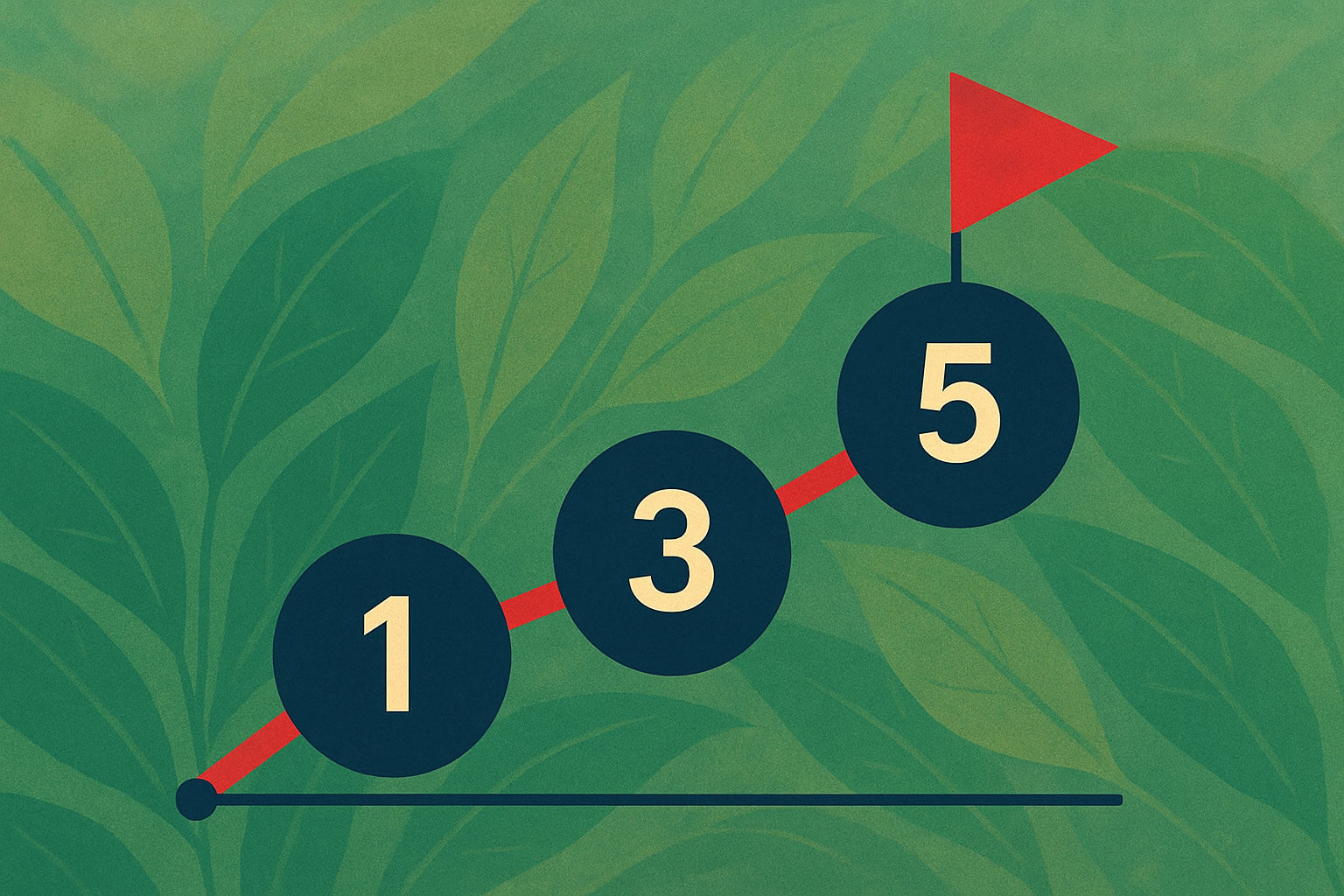
An actionable 1, 3, and 5-year plan bridges vision and execution. It gives leaders a clear roadmap for the future while allowing space to pivot as needed. Here’s how you can build a strategic plan that does more than check a box — it drives real, measurable growth.
1. A Brief History: From Five-Year Forecasts to Flexible Frameworks
The concept of long-range planning first rose to prominence in the 1950s and 60s, popularized by industrial giants like General Electric and DuPont. These companies used detailed five- and ten-year projections to align corporate goals with capital investment and product development.
By the 1980s and 90s, the traditional five-year plan became standard in most organizations. However, as globalization, digital disruption, and market uncertainty increased, long-term plans began to show cracks. Static roadmaps couldn’t keep pace with real-world complexity.
Today, modern strategic planning blends long-range thinking with short-cycle agility, combining the discipline of classic frameworks with the adaptability of agile principles. The 1, 3, and 5-year model is particularly effective because it gives teams both immediate focus and long-term direction.
“Plans are worthless, but planning is everything.”
– President Dwight D. Eisenhower
2. Why Long-Term Strategic Planning Still Matters
Despite the pace of change, long-term strategic planning remains essential. Without it, organizations often fall into reactive mode — jumping from project to project without a clear direction.
A strong plan helps organizations:
- Reduce reactionary decision-making
- Align cross-functional teams toward shared goals
- Improve prioritization and resource allocation
- Build resilience against economic or market fluctuations
According to Harvard Business Review , “[companies] with clearly articulated long-term visions are better equipped to adapt in a crisis — and emerge stronger.”
3. Structuring a 1, 3, and 5-Year Plan That Works
The key to a high-impact plan is balancing short-term execution with long-term transformation. Here’s how to structure your plan:
Year 1: Tactical Execution
- What are your most urgent priorities?
- What foundational work needs to be completed now to unlock long-term success?
- Identify 3–5 high-impact, near-term objectives that can build confidence and momentum.
Year 3: Scaling & Innovation
- What opportunities exist to expand, optimize, or differentiate your offerings?
- How can you use what you’ve learned in Year 1 to push into new territory?
- Focus on building operational capacity and introducing innovation.
Year 5: Visionary Transformation
- Where does your organization want to be positioned in five years?
- What would it take to lead your category, transform your culture, or change how you serve customers?
Visual: Timeline or tiered pyramid graphic to communicate your 1/3/5-year milestones visually across teams.
4. Common Pitfalls That Undermine Strategic Plans
Many strategic plans fail — not because the goals are wrong, but because execution falters. Some of the most common issues include:
❌ Unrealistic timelines: Goals that look great on paper but aren’t feasible with current resources
❌ Lack of market and data alignment: Skipping external research or internal readiness assessments
❌ No assigned ownership: Strategic goals without clear accountability often stall
“Many strategies fail in execution because of a lack of alignment, unclear priorities, and insufficient resources.”
— McKinsey & Company (Closing the strategy-execution gap: How leaders can turn strategy into success)
5. The Rise of Agile Planning
Modern strategic planning embraces agility. Gone are the days of setting a plan and not touching it until next year.
Agile strategic planning means:
- Building a long-term vision but reviewing it regularly
- Setting quarterly check-ins to refine goals and tactics
- Incorporating data and real-time feedback into decision-making
“Agile organizations have a 70% chance of being in the top quartile of organizational health.”
– McKinsey & Company
At Síol Consulting, we help clients adopt an agile strategic framework that ensures they stay aligned to their vision while remaining adaptable to evolving market dynamics.
Conclusion: Build a Living Roadmap, Not a Static Document
A 1, 3, and 5-year plan isn’t about forecasting the unpredictable. It’s about building clarity, structure, and adaptability into your organization — so you can grow with purpose and respond with agility.
Done right, your plan becomes more than a slide deck — it becomes the foundation for bold decision-making, shared accountability, and sustainable growth.